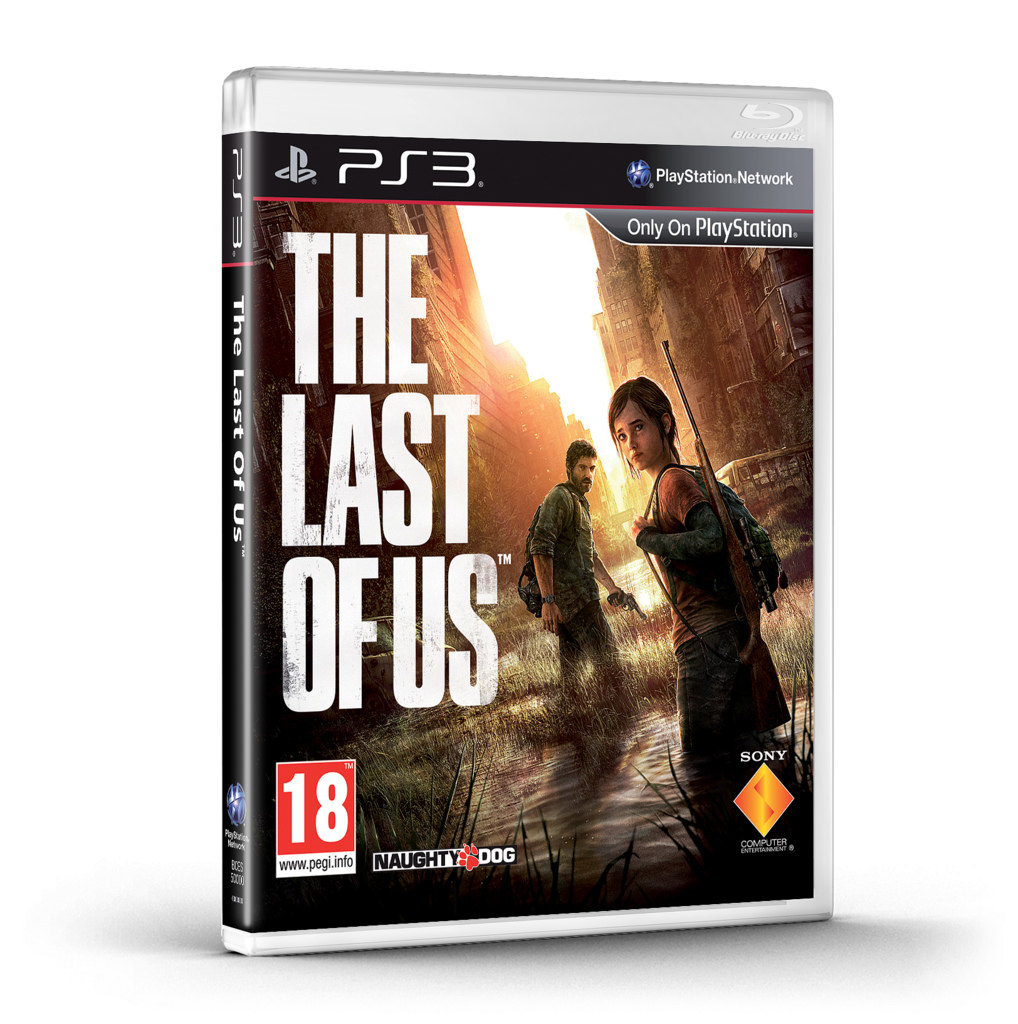
Wednesday, July 2, 2014

How do you recover from a Fully Voiced MMO?

With huge MMO's such as Star Wars, The Old Republic and most recently Elder Scrolls Online falling to the wayside in popularity, I question just how much of an impact the "fully voiced scripts" really have on the games. It also brought me to another thought while playing Carbine's Wildstar: I can't help but wonder how many people are missing out on the depth of story that the game provides because it's not fully voice scripted like previous MMO's that they surely played.

When Bioware first announced that SWTOR was fully voice scripted (Including your characters responses), the buzz around the gaming world was ecstatic. This was literally game changing to the already worn formula of long text conversations with NPC's taking up your quest logs // journal. Most MMO goers that I knew by the second expansion of Blizzard's Warcraft admitted to just accepting quests without ever reading them. For a developer to take a risk and make story important it would have a different kind of impact on the player as they took their journey from 1 to max level. Every NPC that you came across had emotion within their conversation of why you needed to do what you needed to do out in the world. In fact, going out to kill fifteen creatures now had some substance to it and completing tasks brought a sense of reward in itself for helping out that poor NPC. Playing out your own, personal story in a Star Wars universe was pretty amazing as well.

 Unfortunately, the fully voiced questing only lasted for two journey's to 50 in the world of SWTOR for the average player: One Republic , One Empire. Sure the class stories for both light and dark conversation choices were different, but the world npc choices always ended the same way. (with very few exceptions) The class stories were the only "fresh" thing to see when playing a new character and all of the world quests were "space barred" to skip the dialogue. I was one of those people that stuck with Bioware until recently and had one of every advanced class on both sides of the fence... The class stories were the only thing I remember about the game after hanging up my light sabers.

 Having a fully voice scripted game also leads to other problems: What happens when the voice actor decides to not return for an expansion (and wasn't contractually obligated to)? What happens if, knock on wood, a voice actor passes away before recording his lines for the next stages of the game? What happens if the voice actor you've chosen for a character is hated by the community? (Think JarJar quality for 50 levels... I would uninstall before getting off the tutorial planet)

 But most importantly: How do you play a MMO after being so used to hearing your NPC's talk for 2 years or more? Secondly, do you lose interest in the world you're playing in and are you just grinding to max level for the end game with no care for the story behind the end game?

Wildstar is a brand new MMO that is very popular right now and players love the mix of the "old warcraft" feeling (Arguably the best times of Warcraft were Vanilla and Burning Crusade) with new systems and faster combat. But what about the story? While talking to a guild mate (who hit 50 within a few days of the early access)I had mentioned how hilarious some of the journals were. He had no clue what I was talking about. All throughout the game there are random items to click on and read and some of them are just downright hysterical. (For example: I came across a series of steamy love novels scattered throughout a forest with little snip-its of the journal to read and a quest to bring them back to the owner. When you bring them back to the female NPC she immediately warns you to never, EVER speak to anyone about them.) It was sad to me that my guildmate had missed out on some pretty great work that a writer put the time and effort into creating.


Some of Wildstar is voiced (superbly might I add) and also includes cut scenes that attempt to draw the player more into the world that surrounds them, but I can't help but crave actual voiced NPC's that you're able to fully converse with. I feel detached from the character that I play in this game more than I ever did in my 8 year tenure Warcraft. Why? Because between WOW and Wildstar, I played SWTOR. I played a game that my character had voice, reason and a purpose all the way to max level. With Wildstar, I don't feel nearly as invested in the character on the screen that I portray but I do feel intrigued to read about the lore of the lands I'm traveling and the often funny journals keep me thoroughly amused.

 I'm curious to see how others feel about this. I'm curious to hear if those that are playing Wildstar (or still playing Warcraft which still doesn't have fully voiced quests) feel the way I do and feel less invested in the characters they are portraying in the world. (and if they're skipping out on the richness of story buried in the game because they'd have to read it)

 If you're an MMO player, let me know how you feel about switching from fully voice scripted to a partially voiced one is going!

Thursday, June 19, 2014

Destiny Alpha Preview: The hype is believable.


With the new console generation here going forward into the future, no other game has been hyped to the extreme like Bungie's Destiny.  A game reportedly costing Activision 500 million dollars to create, it has been available for pre-order two years before it would even hit the shelves.  The anticipation and prayers of all those Bungie fanatics has been an ongoing, chugging along mega-train of "please don't let this suck".  Bungie has always been held in high esteem for its work on the Halo series, so naturally the bar hasn't moved, and to be honest, the bar has amplified.

When the first footage of actual gameplay hit the floors of E3 last year, fans and news critics a like were not as crazy about the game anymore.  The footage shown was a slow crawl, low level slice of three guardians hitting an area within Old Russia that was supposed to be a live on-stage demo. (It wasn't.)  Granted, many players were excited about finally seeing something from the game besides what Bungie had slowly leaked onto the Destiny website.  It showed off some of the random loot, how quickly world events could bring players together, some of the game's beautiful, visual artwork and how gorgeous the lighting effects played out on the new gen console.  But was it amazing? In my opinion, no. Many gamers out there went on to say that it just looked like a "re-skinned halo" where the combat and creature movements were identical to Bungie's big series.

E3 2014 Destiny news brought with it a major, future impact on the "console war".  Already giving Sony exclusive content rights, the Destiny game would also be bundled with the brand new white Playstation 4 system. More imporantly, Bungie announced that they would allow Ps4 players "Alpha" access to the game by signing up on Sony's website for the chance to do so.  This alpha access allowed players the chance to see both the co-op playability of the game (the open world, 3 person dungeon and social hub) and a sliver of its player vs player maps. 

My experience: 

I signed up not expecting to get into the alpha, nor expected to be able to play it as I was having surgery 2 days prior to the Friday-Sunday access period.  I figured, what the hell, I will play this while recovering and unable to move!  I was hoping to be able to see the game for first hand because I still hadn't pre-ordered it and this might be the determining factor if I would or not.

Friday afternoon rolled along when I turned on my ps4 to see a notification from the system: I was asked to join in on the Alpha play test.  The three minute walk it took me to get to the couch from down the hallway was immediately justified! While the game downloaded, I sat impatiently and watched the progress bar tick away.. 97%..98%...99%....100%! The game then told me that I didn't have access to play it...  What the #$()*#  .

After the initial "wt#$()*#", I restarted the system and then gained the ability to start up the game...but of course: the Bungie server's were down... So 15 minutes later: Finally in!


The first glimpse that you get of the game is the Character Creation screen. (See the IGN video here.)  Here you're able to choose between 3 "races", either male or female body types and a good assortment of faces, hairstyles and colors. I wouldn't say the character creation is anything to write home about, but considering the only time you'll see that face you make is in the games social hub (The Tower), it's not that big of a deal. 

After making my spikey-haired, ginger of a hunter, the game started with me looking at a somewhat familiar landscape from the 2013 beta footage: Old Russia.  This is where I also got my first (and only) bad taste for the game: Your ghost companion. (Peter Dinklage).
Now look, without a doubt Dinklage is great in Game of Thrones, but his voice over in this game is absolutely horrid.  The monotonous tone of his voice coupled with a pretty poor script reading felt like nails on a chalkboard.  Did Bungie make the right decision here? I don't think so.  I think this ghost companion is a missed opportunity... of course that is unless Bungie wanted the little "Advanced AI" to be rival to HAL 9000.  

Voice over aside, lets talk about the first few minutes of the game.

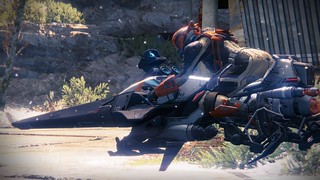
If you've played any shooter on the last gen consoles, you'll immediately feel at home with the ease it takes to learn Destiny's controller.  Weapon fire, reload, weapon change, melee are all in familiar places. The directional pad is used for a few emotes that you'll see people having fun with in the Tower.   Hitting the touch pad of the PS4 controller brings up your ghost, the ability to spawn your vehicle (Which is awesome), see waypoints for mission becons (more on this in a bit) and travel up to your spaceship.  When you're on your ship, you have the ability to use the map and fly to where you want to go.  Whether it be PVP, the social hub of the Tower or back to Earth (and assuredly any other planets available for co-op/story gameplay -- mars/the moon), with a slight hover of your mouse cursor you are on your way.   ((I want to point out here that the segments of the ship flying to the destinations were somewhat long.  I'm unsure if that was just to cover load time or what, but it was at least a great time to take a few drinks))

After tweaking the look sensitivity (it's set way too low from the start), I started looking around at the skyline.  It's absolutely breathtaking to see in person on an HD screen and if this was just the tip of the graphical iceburg, I could not wait to see more.

While roaming the ruins of an old spaceport I took notice of something else... it was becoming day time.  Things that make MMO worlds seem alive are always in the smallest of details and a day/night cycle is easily one of them.  Now with the sun over my head, I headed towards the initial missions destination.

The HUD of Destiny is extremely spacious which enables a gigantic field of vision that isn't hindered by on screen clutter.  In the bottom left hand corner you have your grenade, special ability(s) and then your three guns.  You have a primary weapon, a secondary weapon and a "heavy weapon" all visible to you with the ammunition count.  It should be noted that ammunition drops in three different colors from mobs.  White is your primary gun, green is your secondary weapon and purple is your heavy weapon.  There were a few times where I wasn't paying attention to ammunition during a boss fight, killed some random spawns out in the open and then was forced to charge out into that open area for fresh ammo.  I enjoy the fact that the game pushes you to realize positions like this because if you don't (like I foolishly did) you could get yourself obliterated due to your own stupidity.

Back to the HUD:  The upper left hand corner is where your map is and enemies pop up in the separated quadrants in red.  It's pretty straight forward and easy to check where something might be shooting at you with a small glance upward.  (Enemies that are within a few meters of you show up in a red octagon flash around the center of the map.) If you're in a group, you'll be able to see where your teammates are just by looking around the map for their player names.  This comes in very handy when one of your squad attempts to flank opponents by using a different path.  Should they be downed during one of these maneuvers, you can at least tell where they are to revive them (downed group members have 30 seconds to be revived and can be seen anywhere with a square button icon over their corpse).  The range seems to be infinite as well making it pretty easy to find your group should you go AFK somewhere (Which I don't recommend unless you're absolutely sure nothing will spawn near you).

I'm not going to go into any story specifics but I did want to mention something about the mission beacons.  When you're wandering around the map you can bring up your ghost and see different icons to run to (or ride to on your sweet hoverbike) that have missions for you to grab.  These missions are basically kill x mobs for x items and are the typical mmo time fill sessions.  There was absolutely nothing difficult or special about these quests except for hearing a new voice out in the world telling you why/what you're killing the mobs for. I hope later on in the game those missions change in style // difficulty or they'll really just feel like xp-bar pushers with not a lot of substance.

The Tower:

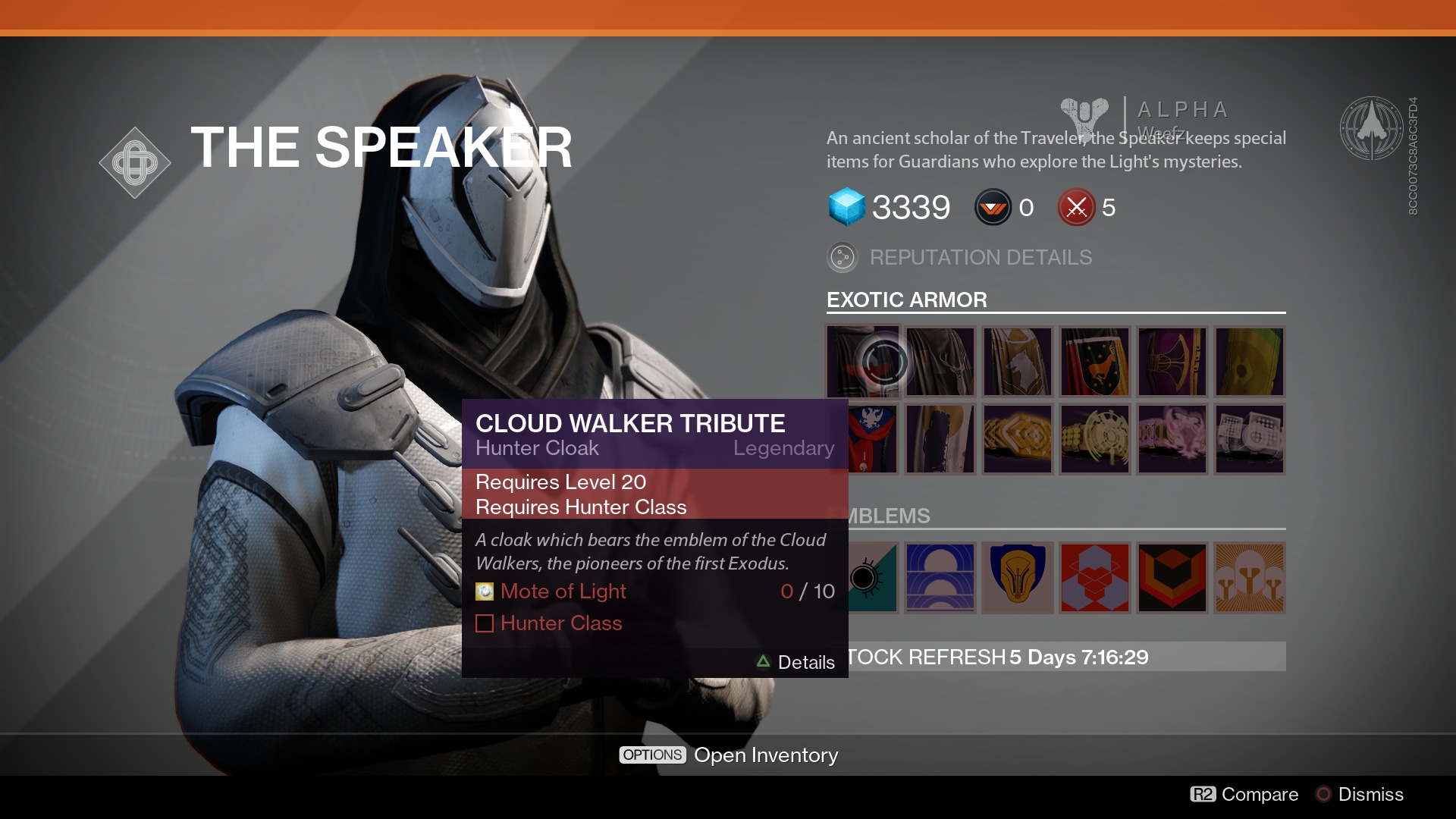
The Tower is the main social hub of Destiny.  When you first arrive here you're given a basic tour of the area learning about the different vendors and what they have to offer.  One of the first NPC's you come across is a mailbox correspondant followed by one that decrypts "Encrypted" items that you find in your travels.  It should be mentioned here that there is an in-game currency that you gain from mission completions, mobs and random loot chests that can be used to purchase "encrypted" items.  You can basically spend your hard earned currency on a dice roll for a good random weapon or armor.

The tower had many other things to offer, including a sneak peak at the end game pvp and pve vendors scattered around the area.  I'm not sure if more of the tower opens up as you play but I would hope it does as the Alpha build seemed to keep this area very minimal.

One thing to note about the "encryption" vendor:   In order to unlock more item slots for random loot rolls, there is another tiered leveling game.  This here is what most mmo'ers know as a "gold-sink", whose purpose is to funnel players currency into the vendor so it feels like the currency is always useful.  I have a feeling that players won't have a problem sinking time into this game though and most people will max out the encryption levels quickly.

The Verdict:

After my few days of playing this game I was absolutely convinced to buy it.  No amount of gameplay that I had seen up until this point had made me say "Yes, I'm definitely buying this".  I'm pretty certain that when the Beta comes around (even if it's only multi-player), more people will feel justified with their pre-order. Bungie has made an absolutely beautiful game that plays smoothly, looks amazing and creates a sense of desire to explore more.

I cannot wait for this game to be a permanent member of my game collection and I'm sure you will feel the same way.

Sidenotes about the gameplay:

-When you gain your "Heavy Weapon", there's never any onscreen tutorial on how to use it.  Hold down your weapon switch to get to it! (rocket launchers are so much fun)
- Your "special ability" in a group should be planned on when to use it.  Each kill with your special ability grants party members an "orb of light" which helps fill out the bar to use that special ability quicker.
- Enemies // Players take more damage when you shoot them in certain areas.  Headshots are usually always the way to go.
-Your weapons//armor can level up! This grants specific perks per gun//armor like faster reloads, heavier damage, etc etc.  The best part is, they level up the more you use/wear them.

- The different abilities you gain as you level up can change even further as you play.  For example, if you continue to use your grenades and kill mobs with them, the opportunity to change how your grenade works will open up.  Each ability has a few tiers of changes so make sure you keep an eye on it. (This is also how you're able to change how jumping works, the more you jump, the better jump unlock you get!)

- Selling items isn't exactly gone over at all either.  You have to dismantle them for weapon parts // currency in your inventory screen.  I'm not sure if there is crafting in the game.
   
Did you play in the Alpha? Let me know how you felt about the game afterwards!


Monday, June 2, 2014

The excitement of E3


I love this time of year.

The video game world fluctuates with excitement throughout the calendar year but these next few months are the absolute best of times.  I feel no shame, or embarrasment, when someone asks me, "What are you going to do after work today?" and my response is : "Watch E3".

Why should I feel shame for being so incredibly excited about this conference? At 34 years old, I feel like I did the morning I opened my Christmas presents under the tree to find a Sega Master System and Nintendo.  At first, I anxiously anticipated charging down the stairs and violently flaying the Christmas presents wrapping paper that had a little sticker with my name on it.  Each present a complete unknown (at least until I learned where my parents hid everything) and each presents unveiling released a unique response of emotion.     Clothing? Boo.  Star Wars toys? Excellent.  NEW VIDEO GAME SYSTEM!?!? Pure bliss.

E3 is the exact same thing.

Last year's conference was truly incredible... not because of the two new systems unveiling themselves to the world... but because of the genuine joy and excitement you FELT from everyone there.  Sure some unveilings and information were boring and mundane, but for the most part? It was Christmas morning all over again.  To see that same expression and brilliance on everyone's face made me feel like I was a part of something amazing and something big.

Watching E3 as a video game fanatic is along the same lines as a sports fan watching his team make their draft pick.  Sometimes you will cheer at Earth shaking volumes for what you see on the screen while other times you'll sit there and go... "Seriously, what the #*(&"  Your excitement levels rise and fall as you see for the first time all of the rumors becoming facts.  First time gameplay live demo'd on the stage might as well be a playoff exhibition game for the way it tugs and pulls at the strings your psyche.  You get your first glimpse at what might be the next best thing and you foam at the mouth for more information later on in the conference.  Seeing and reading interviews with developers can be both thrilling and terrifying depending on the direction the rumored game actually follows.

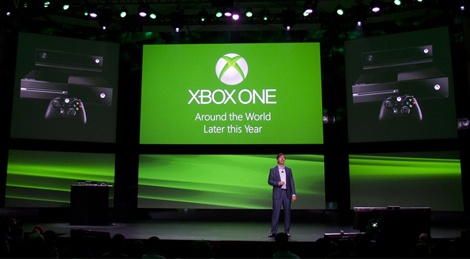
This year's E3 should be extremely interesting.  The dust from last years battle of Microsoft and Sony has settled down only to surely be reinvigorated in the upcoming weeks.  Microsoft has essentially copied what Sony has been doing since last year and both systems are more or less on "equal" turf.  What this means is that this conference will truly be all about the games. (And probably Project Morpheus, but I'll get to that later)  Both systems are now out there and have been through the preliminaries of the gamer world.  The people that didn't purchase both systems in November will likely choose to purchase the missing system this year based on how well the game lineup starts to look in E3.

For example:  Many people were hesitant about buying the X1 last year because of the media (and fan) scrutiny that bombarded the company and surrounded the system with probmatic woes.  Microsoft has since completely changed their tune towards the needs and wants of the people that matter most:  The Gamers.  The system costing 399, as of E3, is a huge step in the right direction and I have a feeling that X1 sales will catch up to the PS4's. I did not purchase an X1, but now I'm definitely considering picking it up since the kinect price is being cut off.  I did not like that I was being forced to purchase a gimmicky add-on that we as gamers have YET to see provide a solid enough reason to have.  (and my girlfriend would probably throw a towel over it whenever we weren't using it because... Damn you NSA!)

Speaking of possible gimmicky add-on:  Project Morpheus.  

I have a feeling that this will be showcased by Sony as the next best thing even though it's hard to demo something you probably have to experience yourself in order to fully enjoy it.  Being an 80's kid and sci-fi nerd, the thought and promise of VR headsets has always been around but has been horrific in reality.
Just wait 20 years...

In the 90's, Sega and Nintendo attempted a VR headset nearly two decades before the Oculus Rift // Morpheus that did not go over so well.  Sega's VR was big and bulky, causing neck pain and nausea while Nintendo's Virtual Boy was just a collosal commercial flop.   As much as we wanted Lawnmower man to happen, it simply did not work. (Maybe that was for the best considering the outcome of that movie...)

But technology has come a very long way since then. Screen resolution, audio quality, body tracking and production materials all light years advanced compared to twenty years ago.  The buzz around the web about Morpheus (and the Rift respectively) is that it's truly a great experience.  So how far will Sony go with VR and will it have the developers changing the way they look at game creation? I'm not sure, but my hunch is that this E3 will answer some of those questions.

My fear about the Morpheus is that it turns into another Kinect.  Great potential, no great games. Aside from the dance games for Kinect, which is really the only best seller for it, there isn't much else to write home about.  VR games have a huge genre already that can be merged into the headset (first person shooters), but if the development teams don't put their full effort into making games specifically designed with VR in mind, I'm not sure that they would succeed and VR would still be just a gimmick.  (Though VR tours of famous places around the world would be a gimmick I'd like to see)

Virtual Reality aside, lets briefly talk about a few games I'm excited to see and hear more of. (Though it seems 2015 will be the major video game year with all the delays being pushed into then... but oh man... it will be an amazing year)

Battlefront:  Let me just tell you that when this game teaser was shown last year at E3 and the iconic blaster noise went off, I immediately jumped up and screamed, "$#!@ YEAH BATTLEFRONT!"  That's how excited I am to see where Dice is with this game still to this day.  I've loved Battlefield and am a huge Star wars fan... so mixing the two?  Words cannot even describe how hyped I am and I'm sure a lot of other fans are with me on that one.

Uncharted:  One of the greater game trilogies out there that I've ever played and I'm definitely excited about the next generation step.  Naughty Dog has always created amazing stories and that's something that I feel will continue on the Ps4.

Halo:  Although I was late to the Halo game, I still appreciated the gameplay and original stories that came with the series.  My hope is that Halo 5 re-establishes the games single player story as something to be admired and not something to be discarded.  Halo 4 (in my opinion) really wasn't that great at all and that is probably because of 343 studios being on new and shakey ground.  Here was a game studio given the flagship of the Xbox and told good luck... Slightly daunting task, right? I hope 343 will knock this next game out of the park because I'd hate to see another Gears of War: Judgement type thing happen. (/shiver)

As you can probably tell, I'm very excited about E3.  You know what is the best part though? It's just the start of the insanity that is the summer gaming conferences.  Are you as excited about the conference as I am? Let me know!  Also: I'd love to hear some past experiences that some of you have had watching E3!


Monday, April 28, 2014

PS vs Xbox: Why the fight, gamers?

Fanboys will always be fanboys.  It follows the same type of loyal fanaticism that flourishes in the world of sports, once you have your team, you stick with them.  The negative side of that fanaticism also rears its ugly head up: You'll hate all competition, especially that of the team on the other side of the fence, and you'll let them know it.


The video game console war, with a side dish of PC fanatics, continues to flourish in the hotbed of the new gaming generation.  To further the sports metaphor, it reminds me of the hatred that New Yorkers have between their teams.  Generally speaking, if you're a Yankee fan you are also a Giants, Rangers and Knicks fan and you loathe the Mets, Jets, Islanders and the Nets.  There's no equal ground to stand on, you just despise the other teams.

The video game industry has the same concrete lines drawn.

Most Xbox fans will rag on Playstation fans and vice versa, without any real reason to hate one another. (I would bring up the Nintendo Wii-U, but they're definitely not the focus in the "console war") We're all supposed to be lovers of Video Games, right?  Nope.  Comments sections of video game sites thrive on hating one another's personal preference.  Say one thing about a system you enjoy playing on and you'll find plenty of people quick to put it down.  If there are major differences between system specs and multi-platform games, you'll be sure to see them pointed out with meme's, quotes, statistical values (for those that go deeper than the name calling) and just flaming hatred in words.

Xbots and Ponys, just two of the derogatory slang terms given for fanboys of Xbox and Playstation, are often used when directly hating on gamers who love their respective systems.  But why? What is the point of directly bashing someone who enjoys the console they chose to purchase and support?  Sports fans have their reason: It's in the form of Championships.  At the end of a season, there is just one team that can prevail as the "best" for that year and get a shiny trophy, bragging rights, a trip to meet the president... and Disney World.

Video games?  Not so much.  Sure there are industry awards, but all gaming systems out there all share the same goal:  Entertainment of their customers. Those awards really don't sway a gamer from one system to the next, nor does it impact their purchases in any shape or form. (Youtube videos, Gaming sites offer a much bigger impact on players)  Why does it matter if the person playing an Xbox is enjoying themselves if you're a Playstation owner? Furthermore, why limit yourself to one console? If you love video games, owning one system is limiting you to the exclusive titles of that one system.  Understandably, cost is a major concern (especially the initial game console purchase), but no one is forcing anyone to buy all the shiny new systems at once.  I, myself, staggered out my system purchases and was able to "catch up" on all of the exclusive titles within a few months time through "combo" game packs and borrowing from friends.


The amount of hatred between system fanatics is flat out disgusting.  One of the most recent comment wars has been between PS+ and Xbox Live subscription differences and quite honestly, it's a pointless battle.  If you're not a video game player, both the Xbox and Playstation have subscription services that allow online video game play and other member perks including free, or discounted, games to download. (the cost is around 50 dollars a year)

The comment war that I referred to above is that Playstation Plus owners are "renting" free games while Xbox Live subscribers get to keep the games they download even if they choose to stop subscribing.

The real laugh about this flame war is that no respectable gamer is going to own a console without either of these services.  Both are incredibly amazing and *should* haves from the start.  Personally, I don't know a single person that doesn't have a subscription to their personal console of choice.  If you have Xbox, you more than likely have Xbox live and if you have Playstation, you more than likely have PS+.  It's absolutely a no brain decision to pick up the services. (Especially when they often come with a trial subscription for free just to see why you should pay for it).  The owner of the system will always have them, period.


So please fanboys, can't we all just get along?


Thursday, April 10, 2014

Subscription models in MMO's: Change is coming.

There has been a long, ongoing battle between what produces a MMORPG (Massive Multi-player Online Role Playing Game... Or MMO for short) as a better game: The monthly subscription (P2P) or the free to play (F2P) model.  Debates, and heated discussions, ignite like wildfire when a game developer publicly announces which model their MMO will be. Both sides of the fence have their reasons why their respective team is better and why the other one is a horrible choice for the game, but which is really the best option?

The MMO world is a fierce battleground when it comes to maintaining a substantial player base. It needs a specific amount of players to financially afford and maintain the servers and hardware that keep the game worlds alive and functioning.  Without people logging in to play, the MMO is doomed to fail and be forgotten about.

In the past, MMO game developers relied heavily on subscription based models to have a continual source of income to put into their game and staff.  Subscriptions averaged 15 dollars a month and expansions to the game were anywhere from 15 to 50 bucks.  Players were to expect regular content update and tweaks from the game developers in order to keep things fresh and exciting within the game world.  Developers often claimed that the funds from the subscription were vital resources to creating new content that players deserved.

But then mobile gaming and F2P came along.


F2P games take on the same philosophy that casinos have with their returning players: Give them something for free in hopes that they spend more in the long run.  Where a casino offers a free room or "free cash to play with", a game developer offers the entire game for free.  The catch with the game is the "extras" or the "perks" that a player can buy are extremely desirable and considered cheap.  Games like Farmville, and most recently Candy Crush, add in specific additions to the game that give the player an advantage.  A farm that produces yield instantly or an extra 5 lives for a dollar instead of waiting for a half hour can get the player hooked to spending.  But free is free.

MMO's started to adopt the philosophy of F2P early on but it has always been on shaky ground.  Guild Wars was one of the more respectable titles but others have seemed to fall on the wayside.  Many of the recent MMO's in the past decade have started out as subscription based games but have turned to the F2P model when they failed to maintain enough players under the P2P plan.  Some game developers have embraced the free model by not sticking it to the players wallets, where others have unfortunately nickle and dimed a franchise.

This is where the fierce battle begins because there are simply more bad F2P games than there are good ones.  But does it have to be that way? No.  In fact, the F2P model is seemingly gaining more ground as developers are realizing that a player will spend more if they're treated with respect.

Rift is the perfect example of how a developer can run its game with a F2P model and still be successful while producing quality content and keeping their players happy.  The team over at Trion gave its whole game for free:  Raids, instances, classes, characters, content, pvp...all of it.  It was a bold, last ditch move that was used to save the game from being shut down when the subscriber base disappeared. The development team took a look at what they can put on their pay market without giving players an edge in the end game stage.  What they found is that players just like fluff.  Pretty mounts and armor, something that gave their characters distinctive and unique looks, was high on the desired list.  Add in xp buffs to help level and they had themselves a competitive market place that didn't take away from the core of the game.

This philosophy of F2P game design is also something we will be seeing with Everquest Next.    David Georgeson, the development director over at EQN, supports a F2P model in saying that if the developers aren't keeping a player entertained that they don't deserve to be paid.  This is a bold and daring risk but the honesty is something to be commended.  The entire future of this game is being placed on the fact that it's all free for the player to enjoy and spend their money where they see fit. 

However, there are some developers that players feel the F2P model is being abused.  Most recently, Star Wars the Old Republic, ran by a development team from Bioware,  has fallen to the dark side. (Couldn't resist.)  One of the most anticipated and hyped games of the MMO world that started out as a subscription based pay model went F2P in under a year due to loss of subscribers.  Bioware instituted a F2P // P2P model that really pushed a player to subscribe with it's lack of "free" content.  Players were forced to purchase skill bars, bank space, character slots, races, the ability to do operations (raids) and warzones separately...   Bioware also seems to put more effort into the fluff of the "cartel market" which pushed players away from the game permanently.  Though the cartel market wasn't something that gave players advantages in the game, players felt that the emphasis of the development team was going in the wrong direction.  As the F2P model was put into place, more and more items were added into the Cartel Market while the core of the game was left essentially the same. Despite recent changes to SWTOR (with two expansions), and a generally more accepting player base, the F2P model has left a black mark on the franchise.

*I will note though that the F2P model had saved SWTOR.  Like it or not, the game went from a desolate graveyard of servers with miniscule populations, to full servers filled with players.*

In my opinion, many players are still scarred by past MMO's "free" to play models and are unable to accept games like Everquest Next's philosophy.  They feel that the developers of EQ will fall into the money trap and focus too much on the players wallets and not the content that they are supposed to be providing. However, there are more and more players who want that F2P option to try out the game to see if the MMO is worth investing in.  If the comments sections are any indication of the future, I feel that the MMO's that are being released this year (recently Elder Scrolls and Wildstar in June) will lose most of its subscribers within the first 6 months and be forced to re-think their philosophies on F2P.     


Wednesday, April 2, 2014

Diablo 3: Reaper of Souls Expansion Review


The recently released Reaper of Souls expansion has invigorated the Diablo series and redeemed Blizzard in most of the fans eyes.  So what has brought the series back onto its feet after being buried in negativity you may ask... Well let me tell you:

Let me just get this out of the way first:  The story of Act 5 really isn't much better than acts 1-4.  The CG-I opener of the game is the usual Blizzard greatness that we expect but it's already been all over the internet and you've probably seen it.  Though a few loose ends are tied up from the first acts, the story is just kind of there and isn't necessarily a compelling factor of playing the game.

Story aside (And arguably the price. 40 dollars is a little steep for a digital download of just a 1 act expansion with 1 more playable class)... Lets get to the major changes that make the expansion a redemption of the Diablo name.

Loot

The first major change actually came in a recent 2.0 patch to Diablo 3 as a precursor to the expansion.  A major complaint among the community was that the loot in the game really wasn't all that special and forced major issues with upgrading characters.  The previous loot design was that an item had 4 to 6 stat boosts and each of those were individually rolled with every stat in the game.  This caused a problem when you would get a rare, or legendary, because it could be completely worthless due to the mixed stats.  You could be playing your Wizard class and get a drop that had strength / dexterity and a Witch Doctor only special damage making the loot absolute garbage.  The randomness of the loot was such a deterring factor in the "end game" of Diablo that many players simply quit playing.  Finding upgrades to help push your character through Inferno was like finding the perfect needle in a pile of needles shoved somewhere in a mountain of a hay stack.  

With the patch, the stat rolls on a piece of gear changed to include what the class of the character you are playing and eliminated the "non essential stats" from classes you weren't playing. This is nicknamed the "smart loot" system.  Gear that dropped would only have stats that were beneficial to your character and made playing Diablo infinitely better again.  When a rare, or legendary, dropped there is a sense of excitement that what you pick up is an actual upgrade to the gear you have on.  Playing in the 2.0 patch after a hiatus made you feel like you were playing a completely different game and your characters that you had would all benefit from it.  

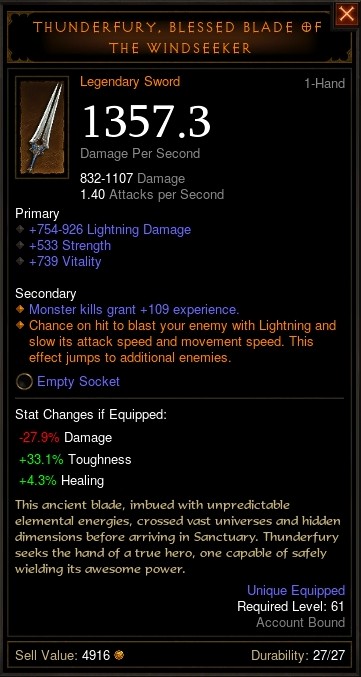
Finding legendary items also became a bit more exciting because of the newly designed philosophy about them.  These items were supposed to be immensely different from rares and not just be different because of the text written on the mouse-over of the item.  (Though I'm sure true lore fanatics loved the little text blurbs) Legendary items were no longer as insanely rare to find and when you did find them your character is more than likely able to use it because of the way stat rolls were changed.  These legendary items also had some bizarre and great special abilities.  For example:  There's an item that makes a treasure goblin follow you around collecting gray/white items.  When the goblin has collected a specific number of items, it spits out a rare (and can also drop a legendary) for you.  Blizzard also added a Thunderfury... with the same proc as it has in World of Warcraft. 

So with the change to loot, the major reason to be playing Diablo in the first place, Blizzard took a gigantic step in the right direction to fixing the core problems that plagued Diablo 3.  The next step was to fix the dreaded "end game" problem of being bored / discouraged to continue playing the mindless slaughter of monsters.  In order to do that, the developers decided to take a look at and tweak a system already in place.  

Torment, Paragon Levels and Crafting

In the 2.0 precursor patch to RoS, major system designs also received an overhaul.  Inferno, Paragon level cap and ridiculous material costs for crafting were all eliminated and replaced with systems that are infinitely better designed for the player.

Crafting: Crafting in Diablo 3 was a bit of a joke to players.  Sure some items could possibly be upgrades while leveling but you still had to deal with the random non intelligent roll factor of the stats and ridiculous material costs (not to mention the gold cost on top of that as you got higher item levels).  Basically the risk was not worth the reward and so crafting just fell to the wayside.  2.0 attempts to remedy that by eliminating a lot of the excess materials from your bags and have two sets of rare/blue/legendary material costs. One set from 1-60 and the other from 61-70.  The "smart loot" system is present now when using the smithy and items that you create are mostly always beneficial to your character class you make the item on.   While leveling new classes, the blacksmith retains the highest recipe list that you have and gives you the opportunity to constantly have that newbie class geared up.  This helps keep the gear disparity low if you've been having terrible luck out in the game with finding an upgrade.  

Torment Levels: The developers decided to completely eliminate Inferno mode and added a slew of new game modes to choose from.  Each of these game modes offer special bonuses and at level 60 you're allowed to use the "torment" difficulty option. Torment has a difficulty slide bar and with each notch you raise it, the xp/gold find and legendary item drop rate increases.  At 70, you're also given the bonus of regular mobs being able to drop "imperial gems" which are significantly better than previously crafted level 60 gems. 

Paragon Levels: Previously added to give more life and meaning to the "end game" of Diablo, paragon levels have had their level cap completely removed and also been giving 4 different categories with 4 subset character stat boosts.  Players are able to distribute points as they see fit for their character to boost up their main and secondary stats.
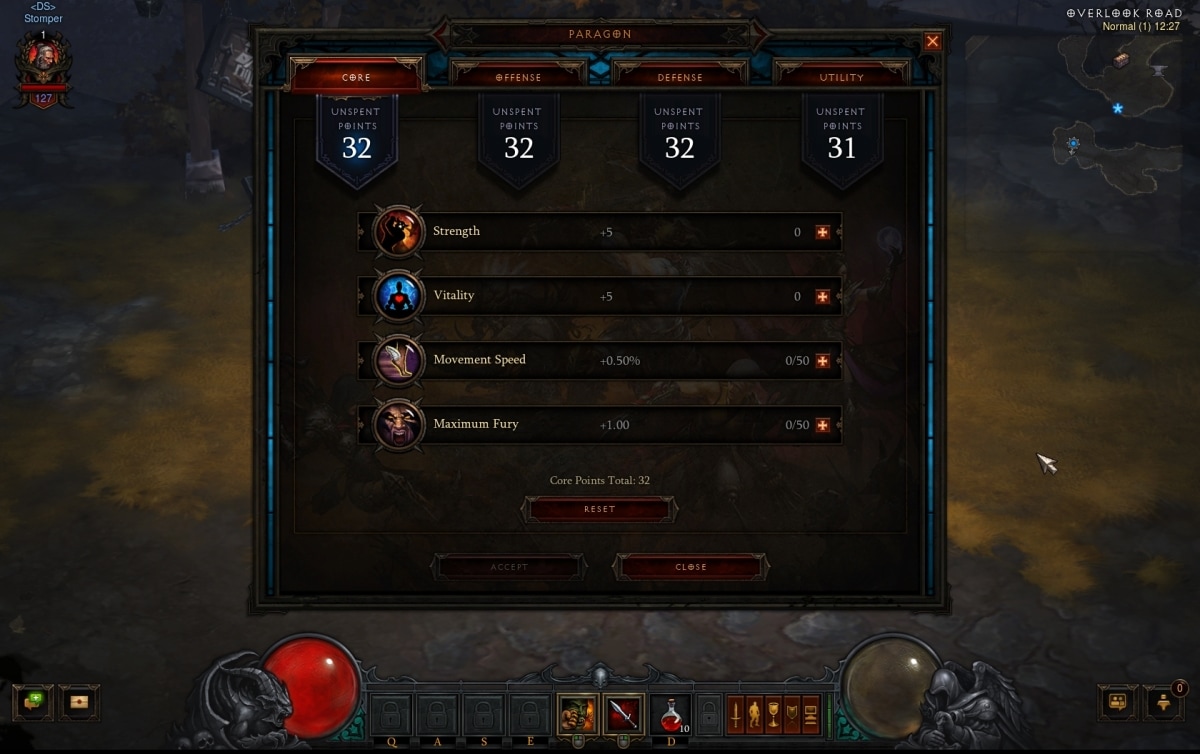
In this picture to the right, you can see that the player has 32 points in each category for the first three categories and 31 points in the last.  They are then able to choose the point distribution how they want, giving the player more control over the way their character is designed to be played.  If you feel your gear is lacking in vitality, for example, you can pump all of your points into that option.  The player is also able to change the points whenever they want with a very convenient reset button. (which just resets that category) So now when you're playing, your character is constantly gaining XP and becoming stronger with every point placement in the Paragon system's categories.  This breathes much needed life into the end game system and is further amplified by the addition of Adventure Mode.


Adventure Mode

The new game mode in Diablo is called Adventure mode and it is just that:  An adventure.   Once you play through act 5 and defeat Malthael, your account unlocks Adventure mode for all of your characters.  If you were sick and tired of redoing the acts per character, you no longer have to.  Instead you can take on bounties and Nephalem rifts to level up and this is truly the Diablo game mode that players have wanted. Adventure mode opens up all waypoints, bosses and acts for you to fully and freely explore the world. 

Bounties: In each act you are able to complete a series of 5 randomized bounties given to you by Tyrael which will yield you a chest that contains a bunch of rares (possibly a legendary), rift keystone fragments and other valuable items.  Each of the bounties are fast, ranging from killing a boss, to killing a named mob and 150 creatures in an area, to cleansing a cursed chest and so forth.  Moving to the next bounty once one is complete is incredibly easy:  Simply hit M and pick where you want to go.  After doing a bunch of bounties you may have acquired enough Rift Keystone Fragments to be able to open a Nephalem rift and the opportunity to slay a Rift Guardian within it.  

Nephalem Rifts: Once you've obtained 5 fragments, you are able to open up a rift to a randomly generated battlefield which pulls any type of monster from the game and inserts it into the tier.  Each tier of the Nephalem rift contains multiple named mobs, elite packs and an eventual Rift Guardian that spawns after you've killed a certain number of enemies.  While slaying pack after pack of mobs, a red bar on the right of your screen slowly fills up until the point you reach 100% filled, only then the Rift Guardian will spawn.  This guardian is essentially a boss fight and will drop a good cache of items once it's defeated.  


Adventure mode is a very simplistic way of making Diablo incredibly fun again and it works.  It gives you a reason to escape the general drag of repeating act 3 over and over and over again for loot and provides you all the elite packs and named mobs it can in quick, short periods of time.  The development team really knocked it out of the park with this and it will easily have players addicted to Diablo once again.

Oh. There's also a new hero class (the crusader) and Myriam the mystic! 

Myriam the mystic is a new NPC for your main town hub that you unlock during Act 5.  Once you unlock her, she is available for all of your characters on the account and this will definitely come in handy.  She's able to provide two services:  Enchanting and Transmogrify.   

Enchanting: With the "smart loot" system in place, enchanting can be an incredibly powerful thing for you.  Myriam is able to provide you with one, and only one, stat change on an item.  For example:  Say you have a set of gloves that have a +armor stat on them that you really just don't need.  You are able to select that stat and buy a new stat roll with some items and gold (both costs are dependent on the quality of the item).  If you don't like the two randomly generated things you were given, you can pay the same cost again in hopes of something better.  In the + armor category, you might just be able to upgrade that set of gloves to have a socket or attack speed in its place.  Items that are potentially a side-grade can become a major upgrade with a good re-roll of a stat!


Though I think this image was just pointing out a bug in the system, you can get the idea of what the enchanting screen looks like.  There on the left you can see the 6 stats that can potentially be "re-rolled".  When you hit the question mark next to the stat, the possible properties appear on the right.  Those possible properties are what can be re-rolled when you accept the cost and enchant the item.  Just remember though, you can only do one!


Transmogrify: The other thing you're able to do with Myriam is re-skin weapons and armor to a different appearance of a different item in the game.  This has been a popular feature in other games and players generally enjoy customizing the look of their characters as much as they can.  When you find certain items in the game, a "New Transmogrify" message will appear in the middle of your screen and you're then able to re-skin any item that you wish to that item. 

For example:  Did you find a Thunderfury and want every weapon you have in the future to look like it? Well you can once you unlock Myriam and give her over some gold.

The last new feature of the expansion is its new hero class:  
The Crusader.

That's also a new weapon for the Crusader only: The flail.
  Though I won't go into detail about the crusader (because honestly, you're going to want to play one), I will say that it is a very accepted addition to the cast of classes you're able to play.  

All that being said, Diablo 3: Reaper of Souls has finally brought the game back to where fans expected it to be.  A fun and action packed dungeon crawler with an addictive quality of excitement when you're craving it. I know 40 dollars and the past woes of this game might be a reason not to pick it up, but you'd be missing out.  This is the Diablo we wanted and now have to enjoy and I definitely recommend checking it out. 

((If I were to give this a number value on a scale from 1-10, I would give it a 9: Only losing a point because of the story.  Although act 5 is pretty mediocre, the dark and dreary moodiness of the level design brings Diablo back to its original roots.  The overall changes of the game have proven that the development team was listening and delivered what the fans of the game franchise wanted))   


Tuesday, April 1, 2014

Diablo 3 Expansion: Has Blizzard redeemed themselves?


Like many other Diablo fans, when the rumor mill started churning about a third game being created, excitement immediately coursed throughout my mind and body.  I also started to worry.  Times had changed in the PC gaming world since the last Diablo release in 2001.   Graphics cards and overall game play // game design had increased in quality at an exponential rate and social media caused a drastic change in the way developers had to look at their games.  If something was wrong, or just complete garbage, news of the atrocity would spread like wild fire through Twitter, Facebook or Reddit and fan reaction would be heard in full force.

Fast forward to 2012:

Despite it being one of the most anticipated and fastest selling games in a 24 hour period before release, Diablo 3 hit a major brick wall with fans on the first day... Error 37.  Players were unable to log in and since Blizzard removed the offline play mode of the game and required always online DRM(which fans were infuriated about), Diablo fans were forced to look at an unplayable game on their screen for a few days.

To add further insult to the fans, Blizzard created a vastly inferior story line to its predecessor and killed off a beloved main character which you had to see 4 times before hitting max level.  Players trudged through the level grind to hit 60 and start the real fun of endlessly grinding mobs for amazing loot for their characters... Or so they thought.  The end game of Diablo 3 was so horrid for quality itemized gear that the Auction House became your best friend. Later, Blizzard decided to add "real money" into it (the AH) causing even more of an outbreak of negative reactions.  Though some people were completely okay with this because they actually made some legitimate cash for playing a video game, it completely destroyed the game by being the straw that broke the camels back.

Diablo 3 was a dead game for awhile and Blizzard knew it because fans let them have it through twitter, forums and any other public venue that people could freely rage on.  They began to listen to the fans feedback and change the game for the better.   First, the developers attempted to figure out a way to make "end game" more viable by adding in the Paragon system and monster difficulty adjusters.  This gave a lot of players the opportunity to get passed the stone wall of Inferno and finish the game on its most difficult level without literally buying the gear off the AH to do so.  The paragon system gave hardcore players a reason to keep playing:  XP and Bonuses. Second, Blizzard knew they had to address the real money//regular AH and finally close it down for good.  They realized that players shouldn't be mindlessly farming gold and selling everything on the AH in order to obtain the gear that their character needed... That wasn't "Diablo".  Finally, the developers knew that they had to "right all the wrongs" with their expansion to D3.


Prior to the release of the expansion, Blizzard released a 2.0 Reaper of Souls patch.  This fundamentally changed the game and gave a preview of what was to come with the expansion.  In the patch, the way itemization was "rolled" on an item changed in a major positive way for the character you were playing.  Random stats that were not beneficial at all (IE strength on Wizard gear) would not be found on any item that dropped in the world.  This meant that when you were out there slaying demons and a rare or legendary dropped, you actually had a legitimate reason to be excited.  Whatever piece of gear that was laying on the ground could potentially be an upgrade where in the past it was more of a hope and prayer that it was.  

Honestly, the loot change single handily was the biggest and best change to make players want to come back and play.  (Though I will admit that torment levels and the increased drops of legendaries was nice as well)

So did Blizzard redeem themselves with this expansion? Check out my next blog to read my review of it!  (Spoilers: The answer was absolutely, Diablo is back and how it should be.)


Thursday, March 27, 2014

DLC's and Micro-transactions in gaming: How far is too far?

The video game industry has a massive problem on its hands: The players of the product are sick and tired of being nickle and dimed after the initial 40 to 60 dollar purchase.  This is something you'll read in countless comments sections on gaming websites, or articles on the internet, about any new game that announces it will have DLC or Micro-transactions. (or both)  

For those that aren't gamers:   DLC is an acronym for Downloadable Content which is just that.  It's content of the video game not found in the main product that you download to add to it.  The content varies from a continuation of the story of the game, to different levels for the player to play on (more commonly seen in first person shooters), extra missions and playable characters etc etc...  Micro-transactions are something that smart phone users are probably more aware of but this way of making extra cash is slipping quickly into the mainstream of triple a video game titles.  MT's are generally something that gives the player an advantage in the game.  For smart phone users:  You need extra lives in Candy Crush? It's a dollar.  Do you need extra boosts? It's a dollar.  Do you want that special farm that produces four times the amount of resource then the free one in Farmville? It's a dollar.   That is a micro-transaction. (and is despised heavily by the majority of the console/pc gaming community.)  

It's only a dollar... c'mon... buy it... You know you want to.
This day and age, it's almost a given that EVERY new game that comes out will have one of these extra cost add-ons but is the product that the production company provides worth the extra cash?  How many extra hours of playable content is the player going to receive and is this all part of the game that could have (should have) made it into the final product when it was released?  When do gamers start saying, "No, I won't pay 30 dollars for a two hour campaign." (Looking at you, Metal Gear)

In a previous blog, I pointed out a player who commented that they were genuinely unhappy about the direction the gaming industry was headed.  His/her reasoning behind this was that production companies // development teams of a video game have in mind at the start a way to make "extra" money.  The way they do this is by setting up DLC, or in lesser cases micro-transactions, that will keep the player dipping into their pockets to see the "rest of the game".   Tin foil hat theory aside, their discomfort with paying extra for a product is understandable and is a shared feeling in the gaming community (myself included).

Do you feel this way about DLC purchases?


But where is the line drawn by a player?  What DLC out there is a "justifiable" purchase and what exactly makes it that way? This is generally determined by the genre of the game, the type of content you're going to receive and how much gratification you will get for the purchase.   Typically speaking, a developer will announce what will come with the price tag attached to the DLC, but a player still has no real clue what they are going to receive if they purchase it early in the form of "Season DLC Passes".  The player might also pick up the DLC package after their first impressions and general excitement to see what the developer has kept up its sleeve to show later on.

Oh Elizabeth...
As a person who rarely buys into DLC, I found myself immediately grabbing the Bioshock Infinite season pass within hours of starting the game. Why did I do this? Simple.  The story was compelling enough to warrant the purchase of seeing more of that story content. (It was announced that there would be playable episodes in the season DLC pass).  The same thing happened with The Last of Us, however I only picked up the story content and not the multi-player DLC map packs/game mode.  Was the 5 hour side story worth the 15 dollar purchase to see more story of TLoU?  Absolutely.  Did I agree with the price? Not necessarily, but since I loved the game so much I felt that I needed to see "untold" story and paid for it.

But what price would've been fair and was I the type of customer that Naughty Dog was aiming that price tag at? The person that loved the game THAT much that they would spend 15 dollars to see more of it? That's where gamers start to feel the disconnect (or distaste/discomfort) between the developer and themselves and start to wonder if they really needed to buy that DLC instead of just watching it on Youtube.

One set of DLC that is most popular (and somewhat disliked about its price) in games is multi-player map pack season passes found primarily for first person shooters.  Both Call of Duty and Battlefield charge 40 dollars for multiple sets of new DLC maps to do battle on which come out every few months.

"Back in my day" moment:  When Counter Strike first hit the FPS scene of the PC, the mod took off among the gaming community so quickly that players themselves started to create their own maps to play on to freshen up the map cycle.  When you joined a new server, you sometimes had to download the maps that were currently running there and it was all for free.  When the map downloads were complete, they were yours for life... or for however long that particular server stayed up and running.

So later on when FPS's started to explode in popularity and developers started to hear the demands for more death match and capture the flag maps to be created, a light bulb must have went off and shined dollar signs.  Players would pay for new maps as long as they were well designed! Go figure.

Myself?  I was disgusted by what developers were doing. I remember being genuinely excited about playing on a map that someone took the time to develop themselves and now that was replaced by a developer looking to make some extra cash.  To me, map packs aren't something that people should pay 40 dollars for but to a hardcore FPS gamer it might be, I don't know.  At the end of the day, you're paying 100 dollars (or more if you ended up getting a collectors edition) for the game.  Is that cost too high just for 16 extra maps to play on when the developer could've just released the game with more multi-player maps from the beginning?  I guess that depends on the person.

In the case of Micro-transactions, most gamers feel that developers are just putting price tags on cheat codes.  If you think about it, a gamer is offered the opportunity to buy certain items or boosts that used to be able to be attained by pressing a series of controller buttons. The infamous "Contra Code" gave you 30 lives but in today's day and age, you can purchase that for a buck through a menu on the "extras" screen.  Gamers are extremely testy and vocal about anything being purchased to give someone an unfair advantage to those that have to play the game "normally".

The Contra, or Konami, code:  The Jesus of Video Game Codes.
When it comes to MMO's // MOBA's, Micro-transactions are often called Pay to Win items because that's exactly what happens.  A player can purchase as many power ups as they can afford in order to give them a major advantage over everyone else.  (Kind of like the Yankees do in baseball...  only you do actually win.  ZING)  Is this a developer crossing a line or morality? I'd say so... But as long as people keep giving the developers money for the advantages and perks, they will never go away.
  
Just remember:  It's your money.  You decide if you want to support the developer and if you feel that you're being taken advantage of, you don't have to give them anything.  If developers start seeing trends that players are refusing to pay 15 dollars for 5 hour campaigns, it just might force them to lower the price to 10 dollars.


Tuesday, March 25, 2014

When do you put down the controller?


   When you're a gamer growing up it's pretty hard to come to the rationalization that you have to put the controller down eventually.  How do you know when it's that time though?  Is there some magical moment when you just realize, "Hey man.  It's been real," and drop the controller like it was a microphone after blowing up someones spot?  I don't think so.   I do believe that there are some signs for gamer's to recognize and come to the reality that they really need to step away from the controller.  

Don't neglect giving your woman some attention, give her the other
controller
.
I'm an avid comments reader of various video game sites and while lurking through one particular article I noticed someone blatantly not happy with the way the video game industry has become.   They went on and on about everything being terrible and nothing being "the way it used to be". As I was reading it, I couldn't help think of the age ole saying:  "Back in my day we used to climb up 8 bit hills with three lives, limited inventory space in our backpacks while being chased by fire breathing, flying turtles..." Okay so maybe I changed that up a bit, but you get the point.

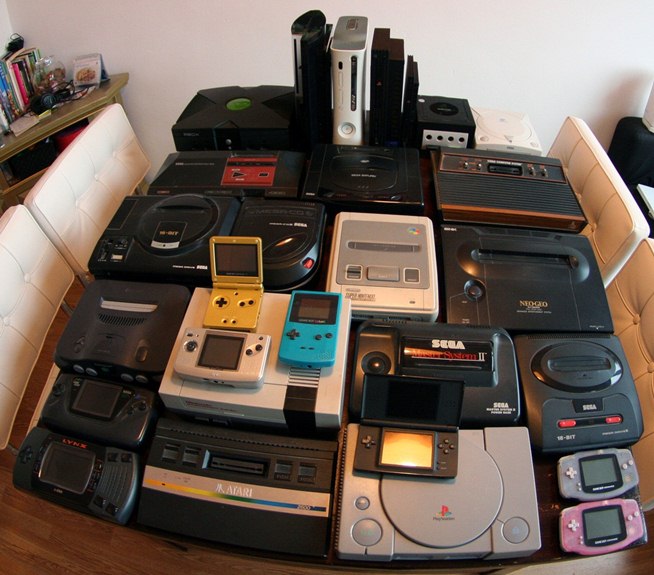
I would imagine that this person was probably my age (in their 30's) because my generation went through the real evolution of the video game industry.  We grew up with the massive changes that came with technologies huge breakthroughs in the video game scene.  We were the front lines of the newer gaming generations in our teens and college years as computers became an everyday household item along side our consoles.  We saw the huge graphics changes, the Cartridge to CD to DVD to BluRay change over and a brand new set of console wars.  (Nintendo vs Sega to Playstation vs Xbox) My generation has definitely been through the trenches when it came to being apart of the evolution of gaming and that's why I firmly believe this is where the bitterness and resentment stemmed from for this specific individual.

Over-critical thinking aside, he/she did have some valid points about how the "scene" is more about publishers milking a customer dry through the likes of micro transactions and DLC's. The overall tone of their rant though was just pure negativity about everything and anything video game related.  They gave off a vibe like they were ready to break up but just can't pull the trigger.  Was he/she just a typical hipster gamer remembering a better time of rainbows and princesses and needed to vent  his frustrations of this "new trend" being an abomination to what was cool back in the day?


Possibly.  This person, however, was attacking games that are well loved for being exceptionally different and have had a major impact on the gaming industry. (They weren't trolling either.)  They spoke about Telltales - The Walking Dead and The Last of Us being "too publicly accepted" because major gaming sites gave inflated scores and wrote up completely inaccurate reviews.   Basically, they claimed that the editors/gaming websites were in the pockets of Naughty Dog (Playstation) and Telltale and were told to blow the trumpets of all that is amazing and holy about the games to sell them.

Now.  I've played both games and both were amazingly well written and paced.  As I previously wrote in an earlier blog about The Last of Us, the story was the major selling point of the game.  It will force other video game production companies to look at the incredible emotion that forced the player to feel during the story and challenge them to recreate what Naughty Dog was able to do.  Telltale was able to provide the same kind of incredible emotion into a three hour game for nearly every "episode" that it has produced in The Walking Dead series.  You feel for Clementine/Lee in season one throughout their adventure in Zombie filled Georgia and continue that journey with Clementine in Season 2 hoping (praying) nothing else horrible happens to that little girl (but in the back of your mind trying to accept that something will.)

When you are so angry // bored // not interested in something exceptionally created and well put together in a video game, it's definitely time to put the controller down and find a new hobby.  Hobbies are supposed to be a release from stress and bring you a sense of happiness, not anger about something completely out of your control.

Another sign it may be time to put the controller down is a fairly obvious one:

Putting the controller down:  On the baby? No.
When you have a child (or a family in general), your priorities obviously change.  At least they should.  It's one thing to have a girlfriend/boyfriend and neglect snuggle time to beat a boss finally (though I hope you have a comfortable couch), it's a completely opposite and terrible thing to neglect the child that you chose to create. When the kid is old enough to pick up a controller, that's when you can probably start integrating "watching" them by playing something fun... but until then.  Baby comes first. 

Game, Set, Match: Baby.
Now I'm not saying that you should give up gaming altogether when you have a baby, but I'm sure many gamer parents can agree that your " video game play time" severely diminishes.  On the flip side, you have a new thing to play with and corrupt that is way more fun than anything on a television/computer screen would ever be able to provide.  (Though with the way technology is going.................   I'm kidding. There is no substitute.)

One last sign that I think it's time to put the controller down is when it starts to interfere with your work//school.  This one is something I've personally dealt with and I'm sure many other gamer's who are reading this (If any at all are reading it, HI MOM!) know all too well.  If you're staying up a few nights a week to try and complete a game it's okay if you've already completed what you needed to get done in real life.  However, when you're staying up and have a ten page term paper to write or a 9 am deadline on that Power Point presentation for your boss.... Just slap yourself in the face.   The digital world will always be there to satisfy your zombie killing, first person shooting, RPG'ing and Minecrafting needs while the real world has no pause button. 

Live your life and game while you can but never forget to continue to enjoy both of them.  If you don't enjoy your hobby of video gaming anymore, put the controller down before it filters into your real life.  No one will think wrongly of you for doing so.

((except your guild, clan, online girlfriend and maybe the people who are playing on the server you host...... they'll get over it.  promise.))  
Thursday, March 6, 2014

Video Game Movies...

Movies and Video games:  Two different versions of entertainment but they just can't ever seem to work well when they're combined.

But why?

Why is it that two seemingly similar mediums cannot find a happy playground to frolic in?  Both are created for the entertainment of their customers.  Both are created to tell a story with a set of main characters and supporting cast that audiences will either fall in love with or despise.  In most cases, both have high production costs and a staff of 100's that work grueling hours to produce something for our entertainment. Both share similar genre fields:  Horror, Action/Adventure, Indie and Sports to name a few.  

So where does it fall apart? 

The Script:

Is it within the story, or subject material, that the two just can't find a happy transition? That is definitely part of it.  Think about it, most video games have ridiculous plots.  A plumber jumping through pipes to go to different parts of the world searching for a princess while breaking bricks with his fist and hopping on his enemies to kill them?  Don't get me wrong, everyone wants to be a hero who saves someone and destroys everything in his/her path to do so, but the story isn't exactly Oscar writing worthy.

It wasn't a blast... Or a thrill ride...

At least that is true with games of the late 80's / early 90's.

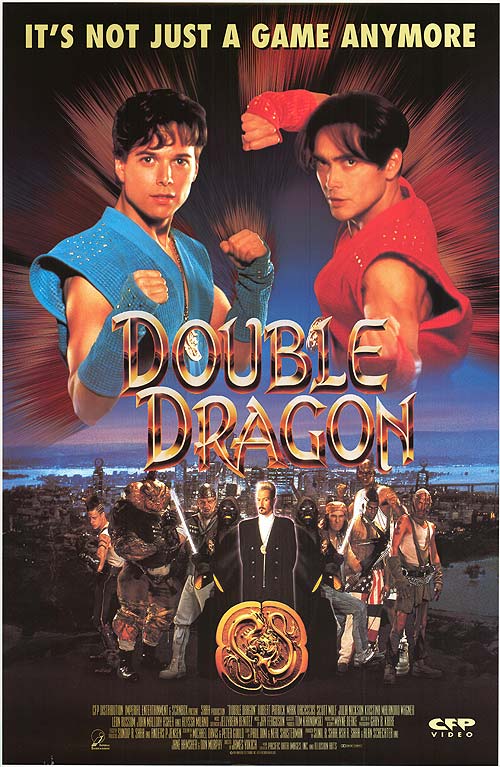
In recent years, video games have come a long way with story emphasis, making compelling drama driven games that fuels a players desire to see it through to the end.  Yet still there hasn't been a video game movie created that has fully encompassed the original source material/story and depicted it perfectly on screen.  Most adaptations are a complete joke and visually comical above all else. (Street Fighter, Super Mario Bros, Double Dragon)

 Good God this movie was horrific.

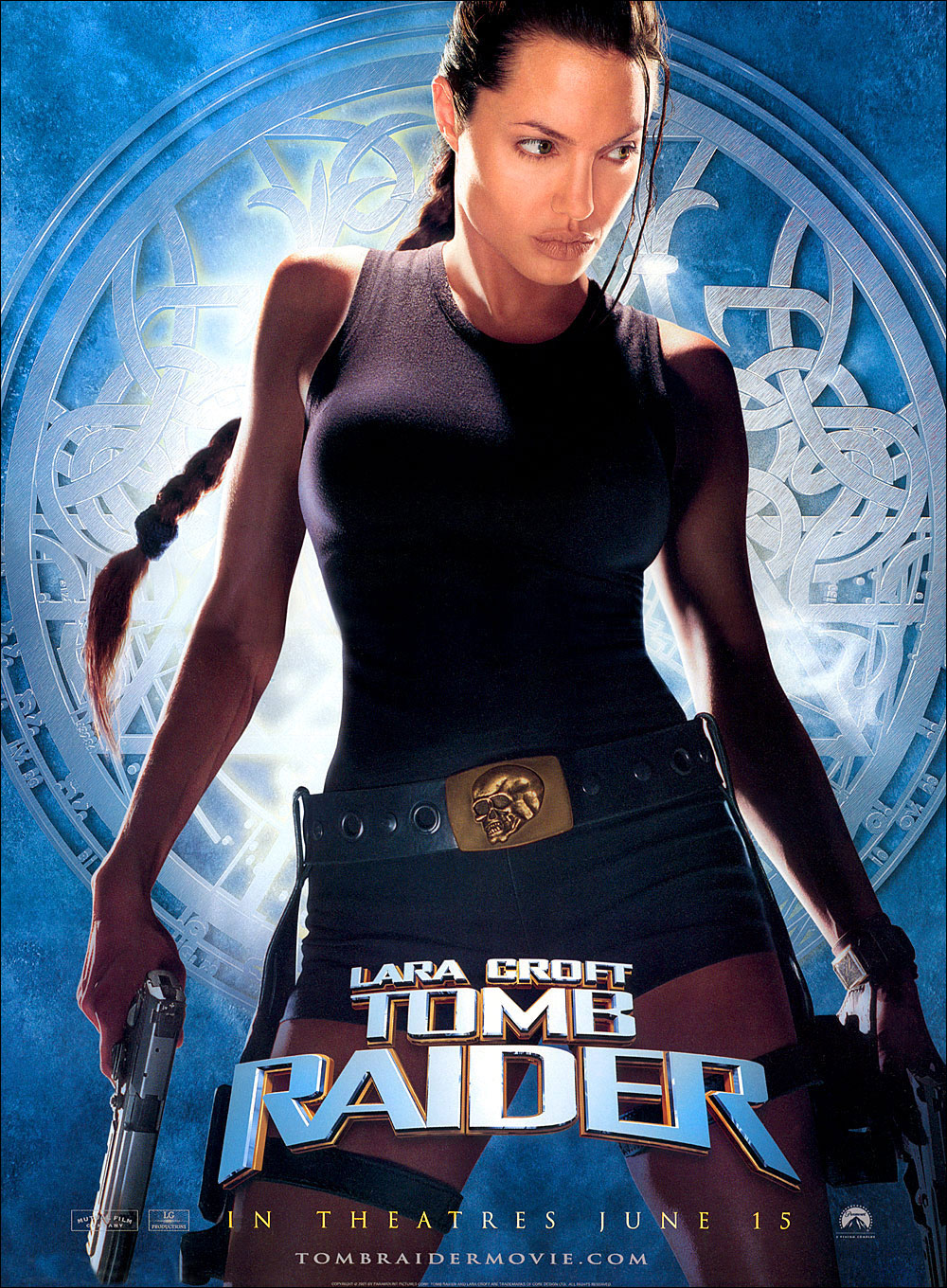
Hollywood has taken a more serious approach throwing big money at games like Tomb Raider and Prince of Persia hoping that visual effects /action (or a hot lead actress that fan-boys have lusted after since Hackers) would make up for a poor background/origin story but has been met with mediocrity. Though both made over 300 million world wide (and Prince of Persia arguably only hit that because of 3D revenue), each of the scripts weren't anything phenomenal.  There was just something missing and that something is the difference between a great movie that you always want to watch or one that just sits in your collection collecting dust.


The Length:

Maybe it's the length of films that cause a major issue in video game adaptations to cinema.  Movie run times are anywhere from 1.5 to 3 hours in length per feature film while most good games last anywhere from 8 to 16 hours.  Character build up and back-story is essentially non existent within movie adaptations to make the script work within its time restrictions.  Instead of the story having multiple dramatic/action set pieces over a long period of time, movie scripts are given one plot for a specific set of characters, a few action sequences and an eventual climactic scene at the end.  It all feels rushed. Literature adaptations to screen generally feel this way as well but there are far more greater "book movies" than there are "video game movies".

As gamers, do we feel more absorbed in the subject matter that we're watching transpire in front of us because of the length of time we're putting into the game? Or perhaps it's because of the fact that we're actively participating in the game itself for that amount of time.  Do we feel more connected to the game then we do with the movie because we're actually driving the story forward?  Sure, but is that a reason for a movie version of what we're playing to be so out of touch with the subject matter at hand? No and that is a shame.

The "Taken Seriously":

Lets face it, movie versions of video games have been terrible to mediocre.  Scripts are often rushed and rarely thought through, character development is a hind sight and the actors/actresses picked to play the roles of the main characters we've come to know and love are B list material. (There are exceptions to this of course)  Movie studios get this notion that fans of a certain video game want to see a live action version of something that they love and adore because we ask for it repeatedly.  However, they don't take it seriously because it's based on a video game that is more often than not considered to be "childish" hobby.  Despite the gigantic leap forward that the gaming community has made with more serious tones of its subject matter, most adults still believe video games are a "kid" thing.   When films are made based off video games, they are are targeted more towards the younger audiences instead of focusing more on an older age bracket.

Games that are created today deal with heavy morality choices and consequences forcing a player to self reflect on their decisions and what played out in front of them.  This is no "childish" hobby by any means anymore and Hollywood needs to treat the idea behind the video game with a lot more respect.  Dark underlying tones, character conflict and harsh realities within fantasy worlds should be depicted with the same solid screenplay writing that you'd see in major movie productions.   The target audience that the screenplay appeals to should be broadened to a wider, more mature variety of people, not just the video game player who asked for a film adaptation of the game.

Lets hope that Hollywood starts to realize that this isn't a kids genre anymore.